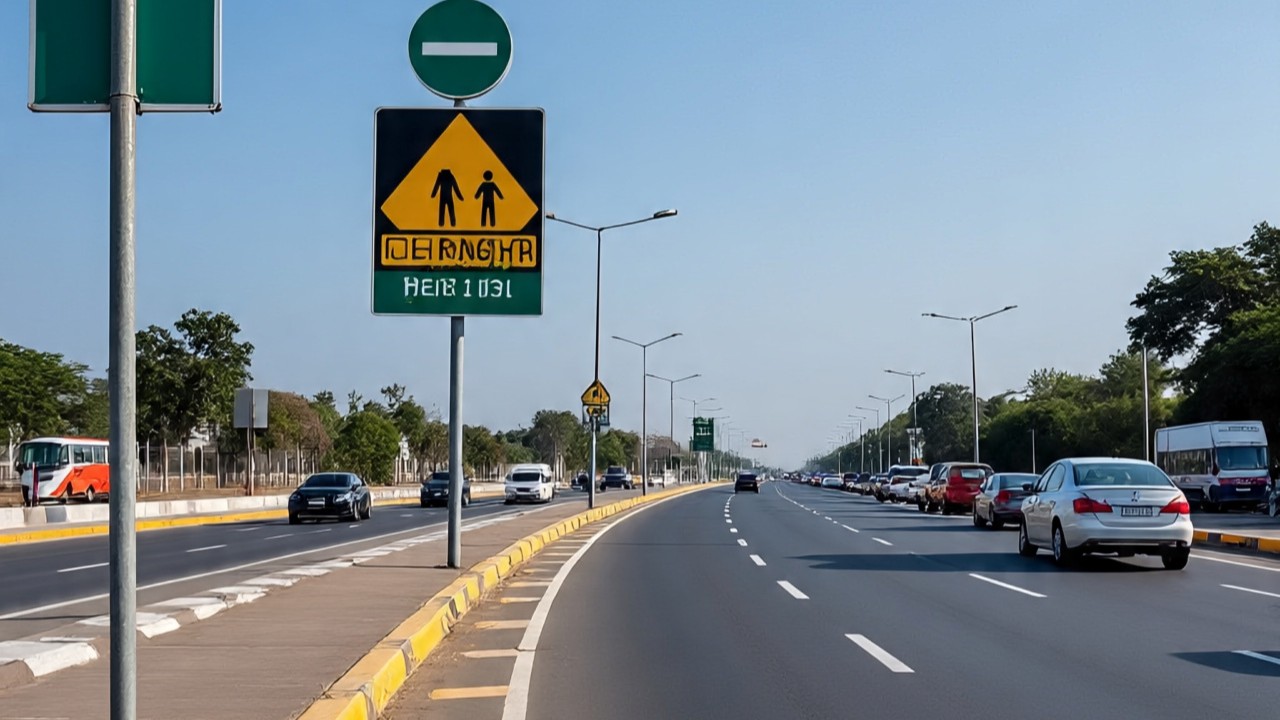
Road signage and marking are essential elements of Nigeria’s road safety and traffic management system. Decades of experience in designing and maintaining highways and urban roads show that poor or missing signage contributes significantly to accidents, congestion, and road user confusion.
Nigeria’s roads, whether urban streets in Lagos or federal highways linking states, require well-planned signage and markings to guide drivers, pedestrians, and commercial vehicles safely.
Importance of Road Signage and Marking in Nigeria
Proper signage and marking:
- Direct traffic flow efficiently
- Reduce accidents and improve road safety
- Provide critical information for pedestrians and drivers
- Enhance compliance with traffic laws and regulations
- Improve driver confidence, particularly on unfamiliar routes
In Nigeria, inadequate road signage is a major factor in accidents, particularly on highways, bridges, and intersections.
Types of Road Signs Used in Nigeria
Regulatory Signs
- Speed limits, stop signs, yield signs
- Enforce traffic rules legally
- Vital for highway and urban traffic control
Warning Signs
- Sharp bends, pedestrian crossings, roadworks
- Alert drivers to potential hazards
- Essential for accident prevention, especially in rural areas
Information Signs
- Directional signs, route markers, facility guidance
- Improve navigation on highways and in urban centers
- Include motorway exit markers and city center information
Temporary Signs
- Roadworks and emergency management
- Crucial for managing traffic during maintenance or incidents
Pavement Marking and Lane Management in Nigeria
Lane Markings
- Centerline and edge line markings
- Guiding lanes on highways and urban roads
- Crucial for multi-lane federal highways
Crosswalks and Stop Lines
- Pedestrian safety at intersections
- Compliance with Nigerian Highway Code
Reflective and Durable Markings
- Use thermoplastic or reflective paints
- Designed to withstand heavy rainfall and tropical sunlight
- Ensures visibility at night and during rainy seasons
Challenges of Road Signage and Marking in Nigeria
- Vandalism and theft – common on highways and urban roads
- Fading markings – due to heavy rains and UV exposure
- Blocked or obscured signs – by vegetation or roadside activities
- Non-standard signs – imported or inconsistent designs
- Poor enforcement – drivers ignoring signs due to lack of penalties
Addressing these issues requires quality materials, proper installation, and regular maintenance.
Best Practices for Road Signage and Marking in Nigeria
- Follow Nigerian Highway Code and Federal Ministry of Works specifications
- Use reflective materials and durable paints suitable for Nigeria’s climate
- Maintain visibility through vegetation management and cleaning
- Ensure consistent design and placement across all roads
- Conduct regular inspections and replacements
Maintenance and Monitoring
- Inspect signage monthly in urban areas and quarterly on highways
- Replace faded or damaged markings promptly
- Implement preventive maintenance programs for major routes
- Monitor compliance through traffic enforcement agencies like FRSC and LASTMA
Nigerian Standards and Compliance
- Federal Ministry of Works (FMW) signage specifications
- Nigerian Highway Code compliance
- Road Traffic Signs and Markings Manual
- International best practices adapted for Nigerian conditions
Experienced engineers often adapt global standards to local traffic behavior, climate, and urban growth patterns.
Cost, Durability, and Lifecycle Considerations
“Proper signage and markings are investments in safety, not mere expenses.”
- Durable materials reduce replacement costs
- Clear signage prevents accidents and reduces road damage
- Lifecycle planning ensures consistent road safety across urban and rural networks
Recommendations for Nigerian Stakeholders
- Plan signage and marking at the design stage of road projects
- Prioritize high-risk intersections and accident-prone zones
- Use reflective and weather-resistant materials
- Integrate maintenance and enforcement programs
- Train personnel in inspection, installation, and compliance monitoring
Conclusion
Road signage and marking in Nigeria are critical to traffic safety, driver guidance, and highway efficiency. Poor signage contributes directly to accidents, congestion, and road deterioration.
By combining engineering standards, quality materials, proper installation, and regular maintenance, Nigerian roads can be safer, more navigable, and longer-lasting.